
With growing focus on sustainable development, choosing the right renewable energy solution is important. Therefore, the right choice helps both the environment and your finances. This guide will help you find the best renewable solution for your needs.
Assess Your Energy Usage
First, let’s look at your current energy use together. We’ll conduct a full energy audit to identify where the most energy is used and where we can improve efficiency. Many businesses can cut their energy use by 10–30% by becoming more efficient (Carbon Trust).
Define Your Goals
Next, decide what you want to achieve:
- Cost Savings: Lowering your energy bills
- Environmental Impact: Cut your carbon footprint
- Dependence: Reduce your reliance on the grid or fossil fuels
Analyze Resource Availability
Then, we will check which renewable resources are available in your area:
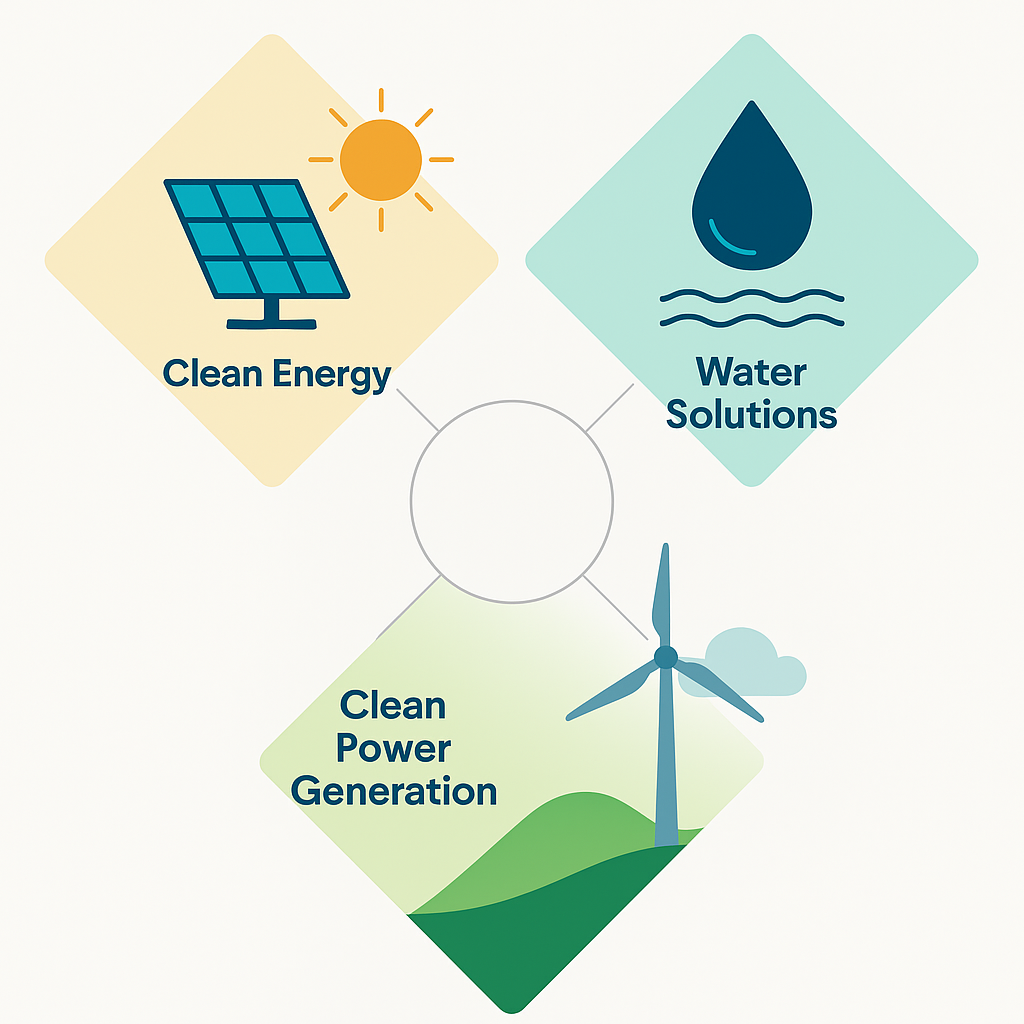
- Solar Energy: Many places benefit from solar panels. Solar can provide clean energy and help you save money.
- Wind Energy: Coastal and offshore areas are good for wind power. Wind can meet a larger part of your electricity needs.
- Biomass and Waste to Energy: This works well in areas with lots of organic or industrial waste. It is common in cities and industrial zones.
Evaluating Technological Fit
Now, we evaluate the technology that fits your needs:
- On-Grid Solar Systems: Good for places with steady grid power. They let you send extra electricity back to the grid.
- Off-Grid Solar Systems: Best for remote areas without grid access. They give you energy independence.
- Hybrid Systems (PV Diesel): Useful in areas with unreliable grids. They ensure a constant power supply.
- Wind Turbines: Great for large operations in windy locations. Small wind turbines can also work for small businesses.
Considering Economic Viability
looking at the costs:
- Initial Investment: Check the upfront cost for installation.
- Maintenance Costs: Think about long-term maintenance and running costs.
- Financial Incentives: Look for government subsidies or incentives. Many places offer good support for renewable energy.
Assess Environmental Impact
We then consider the benefits for the environment:
- Carbon Footprint Reduction: Checking how much you can cut your carbon emissions.
- Sustainability: Think about how the solution supports your long-term environmental goals.
Long-Term Planning
Finally, we plan for your future:
- Scalability: Making sure the solution can grow with your needs. For example, modular solar systems and scalable wind farms can expand easily.
- Technological Advancements: How easy it will be to upgrade your system as technology improves. Energy storage can also help handle times when renewable energy is less available.
By partnering with us through these steps, you’ll find the best renewable energy solution for your unique situation. Whether your goal is to save money, reduce your environmental impact, or achieve energy independence, we’ll guide you carefully to ensure you make the right choice. Once we’ve completed these initial steps together, explore our solutions. We’ll work closely to create a solution that aligns with your goals and supports your long-term growth.
what are you waiting for? Start your journey toward a brighter tomorrow.
Let’s find the perfect solution together
Citation
Carbon Trust. “Energy Efficiency Support.” Carbon Trust, 2023.
Government resources on renewable energy incentives and regulations.
Thanks for highlighting this issue, very eye-opening.